
Lydia James

Fractional Chief Transformation Officer
Executive Leadership for Transformations That Must Succeed

Enterprise transformation initiatives are among the most complex challenges organizations face.

The uncomfortable reality is that more than 70% of enterprise transformation initiatives fail-rarely because of strategy or technology, but because organizations never achieve true alignment across leadership, operations, and execution.

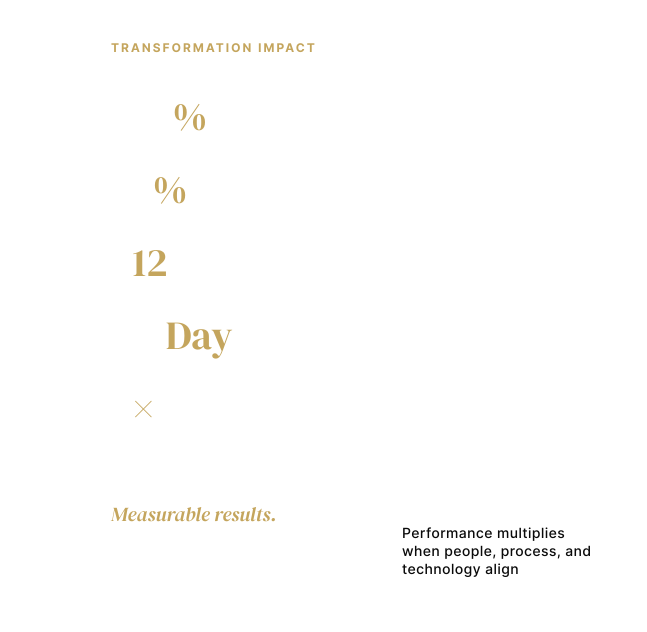
Performance multiplies when people, process, and technology align

What Is a Fractional CTO

Executive-Level Transformation Leadership —
Without The Full-Time Overhead

A Fractional Chief Transformation Officer provides executive-level leadership focused on ensuring transformation initiatives deliver measurable business outcomes.

Unlike traditional consultants who recommend strategies from the outside, the FCTO works directly with leadership teams to ensure transformation initiatives are aligned, executed effectively, and delivering value.

Align leadership priorities across the executive team

Connect strategy directly to operational execution

Ensure technology investments support real business outcomes

Restore momentum to stalled or underperforming initiatives

The goal is not more strategy.

The goal is measurable results.

Why Transformations Fail

Most Transformations Fail Long Before Execution Even Begins

Most transformation initiatives attempt to manage people, process, and technology independently. When these pillars are not aligned, organizations experience entirely predictable — and preventable — problems.

By the time leaders recognize the problem, millions may already have been invested with little measurable return.

70%+

of enterprise transformation initiatives fail — not because of strategy or technology, but because organizations never achieve true alignment across leadership, operations, and execution.

Technology deployed before the problem is understood

Platforms are selected and implemented before the business problem is fully defined, leading to adoption failure and wasted investment.

Leadership teams with competing priorities

Senior leaders interpret the transformation mandate differently, creating misaligned decisions at every level of the organization.

Operational processes incompatible with new strategy

Existing processes cannot support the demands of the new strategic direction, creating friction that slows execution to a standstill.

Employee disengagement as confusion spreads

Without clear direction from leadership, employees disengage from transformation goals — silently eroding momentum across the organization.

The Framework

The Three Pillars of Successful Transformation

Organizations that consistently deliver successful transformation initiatives align three essential elements — and maintain that alignment throughout execution.

Pillar One

People

Leadership alignment, clear ownership, and engaged teams committed to the transformation mission. When people are aligned, the organization moves as one.

Pillar two

Process

Operational clarity, disciplined execution systems, and measurable performance indicators that actively support progress rather than obstruct it.

Pillar three

Technology

Systems selected and implemented to support real business outcomes — not simply new capabilities. Technology follows strategy, not the other way around.

When these pillars operate together, transformation initiatives accelerate dramatically.

The method

Measurable Results Delivered When
Alignment is Restored

These results occur when organizations eliminate internal friction and align execution around shared outcomes. They are not projections — they are delivered results.

300%

Productivity Improvement

In 3 Months

40%

Reduction in Call Volume

With 35% SLA improvement

18%

Revenue Growth

With 63% increase in consults

$15M+

Annual Operational Benefit

Through process redesign

These results occur when organizations eliminate internal friction and,
align execution around shared outcomes.

How to Know If Your Transformation is At Risk

Warning signs often appear months before leadership acknowledges the problem. By the time the pattern is visible, significant investment has already been lost.

If several of these patterns exist, your organization may already be losing transformation momentum.

Why This Matters

The Cost of Discovering the
Problem Late

Organizations routinely invest millions into transformation initiatives before identifying the structural issues slowing execution.

The Executive Alignment Session helps leaders uncover these issues early—before they become more expensive.

In many cases, the insights gained during this session reveal opportunities capable of recovering millions in lost efficiency, productivity, or revenue.

Begin the Conversation

Organizations navigating complex transformation often benefit from experienced leadership alignment.

If your organization is navigating large-scale change, we can explore whether a Fractional Chief Transformation Officer engagement is the right fit.